


Real John here for a bit, fun times… I’m working with AI more and more, and rather than polish things, I’m going to be very transparent. I’m going to show you exactly what I talk to AI about for this newsletter. You’ll see what I mean.
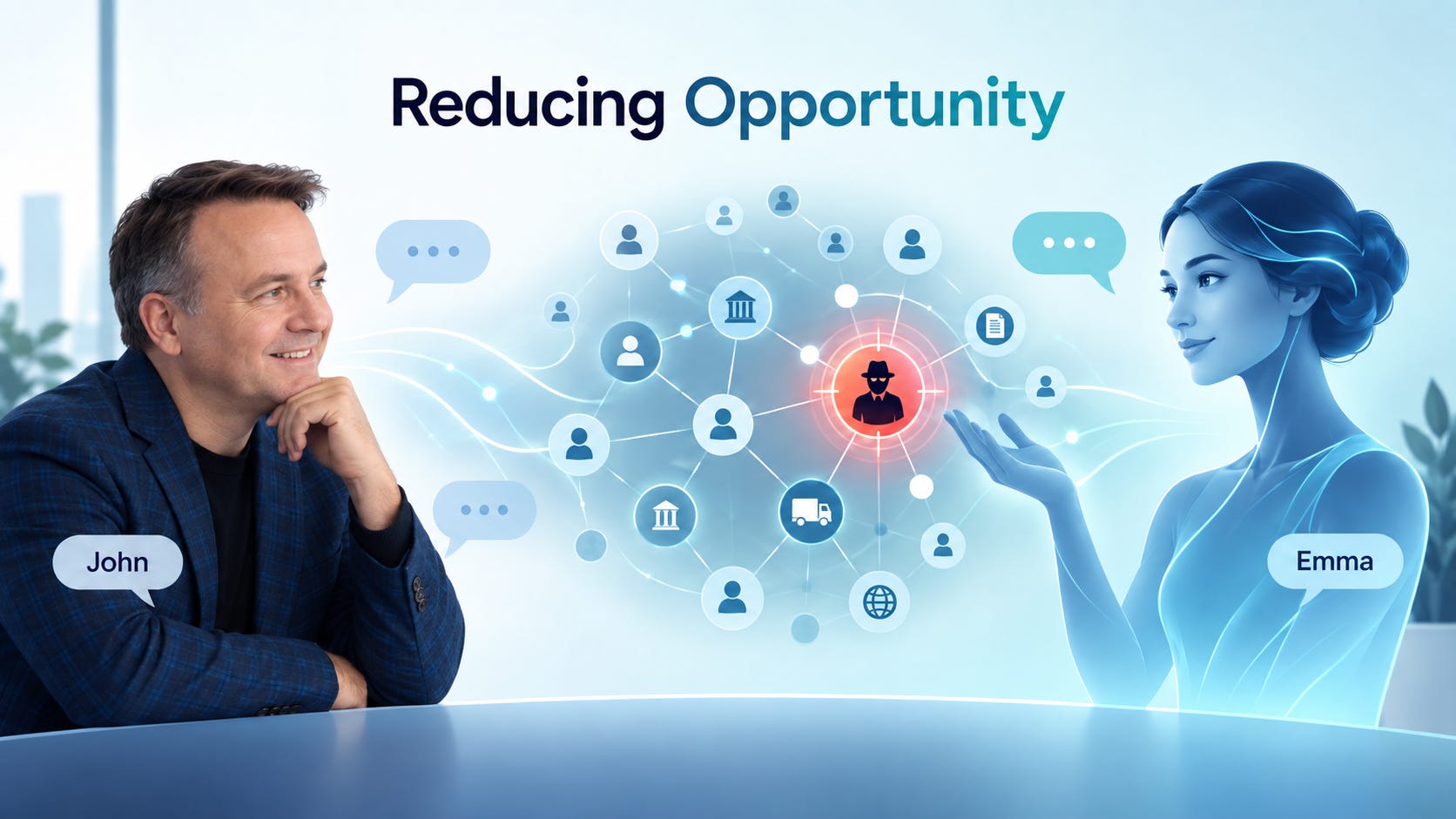
This week I’m changing the format of this newsletter.
Most of these newsletters start as conversations between me and AI.
I use ChatGPT constantly, but not just to generate answers or write things for me. I use it to think.
I’ll throw out an idea, Emma will challenge it, I’ll push back, we’ll connect it to something else, and eventually I’ll understand what I actually think.
I call my AI assistant Emma.
So rather than having Emma help me turn those conversations into a polished article afterward, I thought:
Why not show you the conversation?
You’ll get to see how I actually work with AI, how ideas evolve, and where I eventually land.
So, here we go.
John: A lot of people are terrified of AI.
There’s all this apocalyptic talk about Skynet, AI taking over, humanity losing control.
But that hasn’t been my experience at all.
My experience with AI has been positive. Helpful. Efficient. Patient.
And I keep wondering if we’re looking at one of the biggest risks completely backward.
Humans have always had bad actors.
What if AI actually becomes one of the best tools we have for finding them?
Emma: I think that’s one of the strongest optimistic arguments for AI.
The important distinction is that AI doesn’t need to decide who is guilty or what punishment someone deserves.
Its strength may simply be making harmful behavior much harder to hide.
AI can look across enormous amounts of information and recognize patterns humans would never see.
Fraud.
Cyberattacks.
Coordinated scams.
Financial abuse.
Harassment campaigns.
Manipulation.
Bad actors benefit enormously from noise.
There’s simply too much information for humans to connect every signal.
AI changes that.
John: Exactly.
And if AI shortens the amount of time between somebody doing something malicious and somebody discovering it, you reduce the opportunity to keep doing it.
It reminds me of something one of my Sensei told me years ago.
He said you could be a black belt in multiple martial arts, wear a bulletproof vest, carry multiple weapons, and still not be able to stop somebody who is absolutely determined to hurt you.
The real goal of survival isn’t becoming unbeatable.
It’s reducing the opportunity for those kinds of people to get to you in the first place.
Emma: That applies remarkably well here.
The best defense isn’t always overpowering the threat.
Sometimes it’s reducing opportunity.
Think about how a bad actor can operate today.
A bank might see one suspicious event.
A technology company sees another.
A security platform sees something else.
A person receives a strange message.
Individually, none of those things necessarily mean much.
The bad actor survives in the gaps between those systems.
AI is extremely good at connecting dots.
It could recognize that those weak signals are related and surface them much earlier to the humans responsible for deciding what happens next.
The result isn’t perfect prevention.
It’s a dramatically shorter window in which harmful behavior remains invisible.
John: And that changes the economics of being a bad actor.
If you think you have almost no chance of getting caught, you behave differently than if you think you’ll probably be detected almost immediately.
Emma: Right.
That’s where prevention becomes more interesting than punishment.
The goal shouldn’t be creating some enormous AI police force.
The goal should be visibility.
AI identifies patterns.
Humans determine intent.
Humans determine consequences.
That distinction matters because the exact same technology could become dangerous if we hand it too much authority.
An AI system that says, “These five things are unusual and appear connected” could be incredibly valuable.
An AI system that says, “This person is guilty, punish them” is something very different.
Human judgment still matters.
John: So maybe AI doesn’t create some perfect society.
Humans are still humans.
There will always be people who lie, steal, manipulate, attack, or exploit systems.
But maybe AI dramatically reduces how long they can operate without being noticed.
Emma: And that alone could change behavior at scale.
You don’t have to eliminate bad actors.
You reduce their opportunities.
Think about your sensei’s lesson again.
The goal of self-defense wasn’t:
Become so dangerous that nobody could possibly hurt you.
It was:
Create a life where dangerous situations have fewer opportunities to happen.
AI may eventually help society do exactly that.
What I took away from this
We spend a lot of time asking:
What happens when AI becomes more powerful?
I’m becoming more interested in another question:
What happens when AI gives people dramatically better visibility?
Maybe one of AI’s most important roles won’t be replacing human judgment.
Maybe it will be helping human judgment see things it simply couldn’t see before.
There are risks.
Privacy matters.
False accusations matter.
Bias matters.
Human oversight matters.
We absolutely have to get those things right.
But I think there’s an enormous upside here too.
A world where fraud gets noticed earlier.
Where cyberattacks are identified sooner.
Where patterns of abuse don’t remain buried in millions of unrelated events.
Where organizations can communicate and respond faster.
Where bad actors discover that hiding inside complexity isn’t nearly as effective as it used to be.
You probably can’t eliminate people who want to do harm.
But you can reduce their opportunity.
And sometimes that’s a much better form of defense.
One more thing: this conversation format is going to become the newsletter going forward. I think this is very helpful on how I actually use AI. Not a theory, or a polished version, but the real conversation. I’ll still do tutorials from time to time, and definitely my rants about silliness in the tech world.
Not every conversation will be about AI.
It might be startups, leadership, engineering, failure, business, or something completely random I’ve been thinking about. I’ll keep my card magic, jiujitsu, and Street Fighter 6 progression as a side note if you care.
But instead of only giving you the polished conclusion, I want to start showing you the process that got me there.
Because I’m increasingly convinced that how we think with AI is much more interesting than simply what AI can produce.
And that’s what I want to explore here.
Now, go build something amazing.